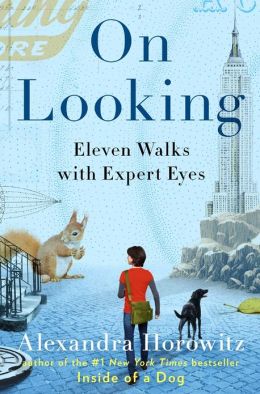
 This thoughts come to mind because I started reading this book called On Looking by Alexandra Horowitz. It is the story of how the author herself decided to take eleven walks with different people to see what they perceive. For example, she takes a walk with a geologist, a sound designer, a child, and even her own dog! She tried to see things how they all saw it, from their perspective. Truthfully, I haven't read much of the book, just the first chapter, but by just reading what is the introduction to this book, it got me thinking on all the truth that she was speaking by pointing out that we miss out most of the things that are really happening around us. Plus, the most interesting part of it all is that she got me thinking that, it isn't about what we see, it's about what we don't see and how we ignore certain facts and just put our concentration on minor details that don't really let us see the bigger picture or what's important. So, why is it that we do this?
I believe all of this has to do with our identity. It may not seem very clear, but all those things that make us see differently have to do with a set of characteristics by which a person is known. If I'm a woman, I will see things differently then a man, or if I'm from the Caribbean, I will pay attention to some things and avoid others. In my case, which is the only case I can actually tell you about with certainty, there are many factors that let me see some particular things. For example, I've always loved nature, and every time I walk through my university, I look at the floor to see the leaves laying on the floor and how they're stepped on, or how they move with the wind, or I notice that in some areas the grass looks greener and in others it's more brown, or how sometimes in between the cracks on the sidewalk there are little plants growing from underneath like they're trying to break through the cement. It truly just depends on what that person finds interesting and worth watching.
In conclusion, our perspective depends on the things that distinguish a person from others, and I believe that this factors will let us see what we want to see which in reality is the only the thing that we see.

In my opinion, sometimes when we focus on minor details it's not that we don't see what's important but that we believe that the detail we're focusing on IS what's important. But it's true, we might end up missing out on a lot and that's why I believe that listening to other points of view or perspectives on a situation or place helps expand the way we look at life around us. Your examples were also very true!
ReplyDeleteIt's true that the way we perceive certain things have to do with our own individuality. For example, people always recommend me to study while listening to classical music, because it tends to be more relaxing, but I find it very distracting! I'm a musician, so I start trying to identify all the instruments in the piece and I just can't handle myself! So I agree that most of the time we notice only the things we are interested in.
ReplyDeleteIt is true that personal interest and circumstances influences in what we perceive of what we see. This is exactly the basis on how people reach their dreams. Once a person identifies a dream automatically the brain will understand that is important for him. Everything that the senses identifies something that is related to the dream it will be perceived by the person, and other persons which do not have the same dream will ignore what his senses are perceiving.
ReplyDelete